


For more than a century, capitalism has shaped not only our economies, but our identities. It has influenced how we measure success, how we define failure, and how much of our time, energy, and self-worth we attach to work. Over time, one deceptively simple question has become a cultural shorthand for all of this tension.
Do we live to work, or do we work to live?
It appears everywhere. In graduation speeches urging ambition. In social media posts warning against burnout. In corporate wellness programs, side hustle culture, and quiet moments of reflection late at night. The question is usually framed as a moral choice. Pick a side. Hustle or coast. Ambition or balance.
But what if this question itself is flawed? What if it no longer reflects how work, life, and meaning actually function in a modern economy?
To answer that, we need to step back in time. Not just to the 1970s, when the phrase work-life balance entered mainstream language. Not only to the 2008 financial crisis, which reshaped trust in institutions. We need to go all the way back to 1905, to the work of Max Weber. Then we need to move forward to the modern economic analysis of Ruchir Sharma. Only then can we understand why ONELife exists, and why the old binary no longer serves us.
Max Weber and the Birth of Work as Identity (1905)
In 1905, German sociologist Max Weber published The Protestant Ethic and the Spirit of Capitalism. He was not writing a celebration of capitalism, nor a critique in the modern sense. He was attempting to explain its origins.
Weber observed that capitalism emerged and flourished in societies where work became more than a necessity. It became a moral calling. Discipline, punctuality, thrift, and delayed gratification were elevated to virtues. Profit was not sinful if it was earned through effort and reinvested rather than wasted on excess.
In this worldview, work was inseparable from identity. How you worked reflected who you were. Diligence signaled virtue. Laziness suggested moral failure.
This is where the idea of living to work truly begins. But it is important to understand how different this was from today’s hustle culture. Weber’s version of living to work was restrained, purposeful, and long-term. It emphasized consistency over speed and responsibility over status. Work mattered because it anchored meaning and contribution.
Weber also warned that this system carried a risk. As capitalism became more rational, efficient, and rule-bound, it could lose its original sense of purpose. He famously described the possibility of an “iron cage,” a system where people follow incentives and routines without understanding why, trapped in efficiency without meaning.
At the time, this sounded theoretical. Today, it feels prophetic.
From Calling to Cage: When the Question Flipped
As the twentieth century progressed, work began to change. Industrial labor gave way to knowledge work. Technology accelerated productivity. Communication tools blurred the boundary between office and home. At the same time, wages for many workers stagnated, job security declined, and inequality widened.
By the 1970s, a cultural counter-movement emerged. People began asking how to protect life from work rather than how to find meaning through it. The phrase work-life balance entered the conversation. Soon after, the slogan work to live gained popularity.
On the surface, this shift was healthy and necessary. It pushed back against exploitation and burnout. It reminded people that they were more than their jobs.
But over time, the idea subtly shifted. Work to live began to mean minimizing work rather than redefining its role. Work became something to escape, endure, or optimize away. Meaning was sought elsewhere, often disconnected from contribution or effort.
This shift solved one problem while quietly creating another.
Ruchir Sharma and the Diagnosis of Modern Capitalism
Enter Ruchir Sharma, a modern economist who has spent decades studying why nations grow, stagnate, or decline. In books such as The Rise and Fall of Nations and The 10 Rules of Successful Nations, Sharma makes a provocative claim.
Capitalism today is no longer operating as capitalism.
According to Sharma, governments and central banks have intervened so aggressively that markets have lost their ability to correct themselves. Bailouts, subsidies, ultra-low interest rates, and permanent stimulus suppress failure. Weak firms survive. Capital remains trapped in unproductive uses. Risk is rewarded rather than disciplined.
Sharma refers to this as “capitalism without failure.” And he is clear: capitalism without failure is a contradiction.
This distortion does more than weaken economic growth. It reshapes how individuals experience work. When effort no longer maps cleanly to reward, motivation erodes. When consequences are removed, learning disappears. When systems promise protection instead of progress, both ambition and responsibility decline.
Why Sharma Rejects Both Sides of the Slogan
Sharma is often misunderstood as defending grind culture. He is not. He does not argue that people should work endlessly or sacrifice their lives for productivity. He does not claim that work should be the central source of meaning.
At the same time, Sharma would also reject a version of work to live that avoids effort, responsibility, or failure. Societies that treat work as something merely to get through tend to stagnate. Innovation slows. Trust weakens. Growth is replaced by debt and stimulus.
💡 Living to work in a distorted system produces burnout and fragility. Working to live without purpose produces stagnation and disengagement. Both extremes fail.
The Real Problem: A False Binary
When Weber and Sharma are read together, a deeper insight emerges. The problem is not too much work or too little work. The problem is the assumption that work and life are opposing forces.
They are not.
Work is one domain of life. An important one, but not the whole. When work becomes identity, life shrinks. When work is rejected entirely, contribution fades.
The binary question forces a choice that does not reflect reality.
ONELife and the Messy Middle
ONELife begins where this binary ends.
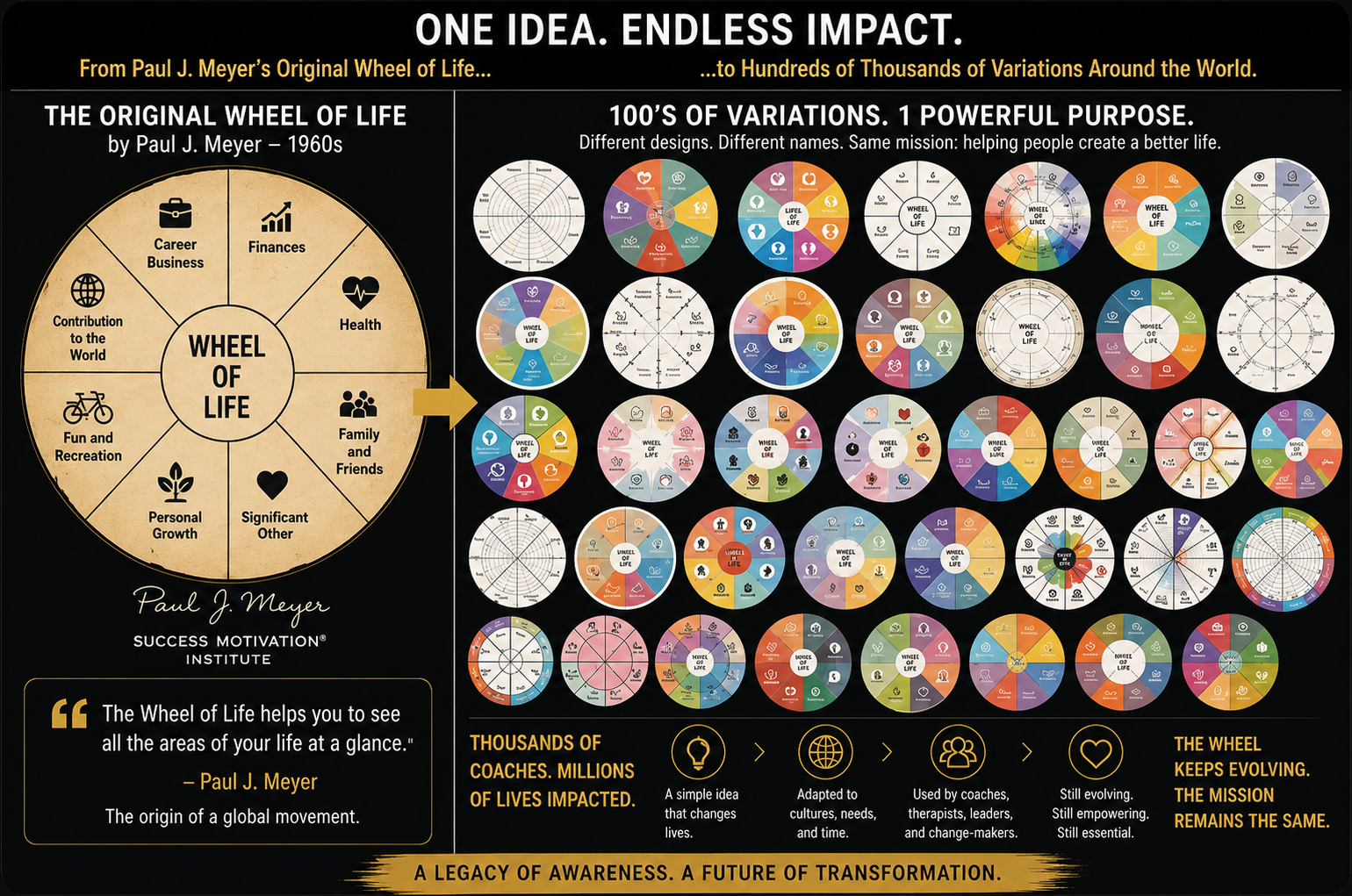
Instead of asking whether we live to work or work to live, ONELife asks how work fits into a life that evolves over time. Life is not a static balance to be achieved once. It is a system in motion. A wheel that must be rebalanced across seasons, transitions, and disruptions.
In the ONELife framework, work is a spoke, not the axle. Purpose is the seat. Values form the core. Health, relationships, finances, growth, hobbies, environment, and contribution all matter. Overemphasize one domain and the wheel wobbles. Ignore another and it eventually collapses.
This is the messy middle. The space between slogans and lived experience. Between ambition and exhaustion. Between security and stagnation.
A Better Frame for the Future
If Weber explained how capitalism was born with purpose, and Sharma explains how it survives today without discipline, ONELife offers a human-scale synthesis.
➜ Work with consequence
➜ Live with purpose
This does not mean glorifying hustle. It means accepting that effort matters. It does not mean minimizing work. It means placing it in proper relationship to the rest of life.
Work becomes a source of contribution rather than identity. Failure becomes feedback rather than catastrophe. Success becomes sustainable rather than extractive.
Why This Matters Now
We are living through a period of profound transition. Burnout is widespread. Trust in institutions is low. Younger generations are skeptical of work itself. Older generations feel trapped by systems they helped build but no longer recognize.
The old slogans are no longer sufficient. Hustle culture ignores human limits. Quiet quitting ignores human potential.
What comes next requires integration rather than opposition.
The Real Answer
So do we live to work or work to live?
Neither.
We live. And work is one of the ways we express that life through contribution, growth, learning, and purpose. When work dominates life, we burn out. When life rejects work, we stagnate. When both are integrated with intention, resilience emerges.