


Executive Summary
The 9 methods shown are powerful execution tools that help you prioritize within a single domain (usually work/productivity). ONELife operates at a fundamentally different level: it’s a strategic system that helps you prioritize across 8 life domains.
Key Distinction: These methods answer “Which tasks today?” ONELife answers “Which life domains this quarter?”
They’re complementary, not competitive. You use ONELife to set strategic priorities across your life, then use these 9 methods to execute within those priorities.
The 9 Methods: Quick Overview
Clarify Priorities (3 methods)
1. Eisenhower Matrix: Urgent vs. Important quadrants
2. Pareto Principle (80/20): Focus on the vital 20%
3. Warren Buffett’s 5/25: Pick 5 goals, ignore the other 20
Evaluate Tradeoffs (3 methods)
4. RICE Method: Score by Reach × Impact × Confidence ÷ Effort
5. MoSCoW Method: Must, Should, Could, Won’t have
6. ABCDE Method: Label tasks A-E by importance
Act With Focus (3 methods)
7. Eat That Frog: Do hardest task first
8. Time Blocking: Protect time with dedicated focus blocks
9. Batching: Group similar tasks for efficiency
The Critical Difference: Tactical vs. Strategic
| Traditional Methods (Tactical) | ONELife (Strategic) |
|---|---|
| Operate within ONE domain (usually work) | Operates across 8 LIFE DOMAINS |
| Time horizon: Daily to weekly | Time horizon: Weekly to yearly |
| Question: Which tasks should I do? | Question: Which domains need focus? |
| Focus: Execution efficiency | Focus: Strategic direction |
| Assumes: You know what matters | Addresses: HOW to determine what matters |
💡 Bottom Line: These 9 methods help you DO things right. ONELife helps you DO THE RIGHT THINGS.
Detailed Analysis: Each Method vs. ONELife
1. Eisenhower Matrix
What It Does: Categorizes tasks by Urgent/Important. Focus on Important-Not-Urgent quadrant.
Limitation: Works within a single domain. Doesn’t help when you have important work tasks, important family commitments, and important health goals all competing.
ONELife Adds: Framework for determining which DOMAIN is most important this quarter. Then use Eisenhower within that domain.
Integration: ONELife says ‘Leadership development is your #1 priority.’ Eisenhower helps you identify which leadership tasks are important-not-urgent.
2. Pareto Principle (80/20 Rule)
What It Does: Focus on the 20% of efforts that yield 80% of results.
Limitation: Assumes you can identify the vital 20%. Doesn’t help when you have vital 20%s in MULTIPLE life domains.
ONELife Adds: Strategic framework showing which life domains are the vital 20% for THIS life stage.
Integration: ONELife identifies that career + health are your vital 20% right now. Pareto helps you find the 20% within each.
3. Warren Buffett’s 5/25 Rule
What It Does: Write 25 goals, circle top 5, actively avoid the other 20.
Limitation: Great for career goals. But what if your top 5 includes career goals, family goals, health goals? How do you prioritize across categories?
ONELife Adds: Domain-aware prioritization. You might have 2 career goals, 2 relationship goals, 1 health goal as your top 5, but ONELife helps you balance across domains.
Integration: Use 5/25 within each strategic domain ONELife identifies, not across your entire life randomly.
4. RICE Method
What It Does: Score initiatives by (Reach × Impact × Confidence) ÷ Effort.
Limitation: Product management tool. Works for comparing similar initiatives. Breaks down when comparing across domains (how do you score “launch feature” vs. “exercise daily”?).
ONELife Adds: Life-domain framework that acknowledges some domains aren’t about ROI. They’re about fulfillment, health, relationships.
Integration: Use RICE for work initiatives after ONELife determines how much of your energy should go to work vs. other domains.
5. MoSCoW Method
What It Does: Categorize as Must Have, Should Have, Could Have, Won’t Have.
Limitation: Project management framework. In life, you might have Must Haves in 5 different domains. Now what?
ONELife Adds: Strategic priority across domains so you can determine if this quarter’s Must Haves come from career, relationships, or health.
Integration: Within your top-priority domain (per ONELife), use MoSCoW to sort initiatives.
6. ABCDE Method
What It Does: Label tasks A (must do) through E (eliminate). Focus on As.
Limitation: Task-level prioritization. Every domain has A tasks. How do you choose between A-work-task and A-family-task?
ONELife Adds: Meta-framework showing which domains deserve A-task focus this quarter.
Integration: ONELife provides the context: ‘Career is priority 1, family is priority 2.’ Now you can label tasks knowing which As trump other As.
7. Eat That Frog
What It Does: Do your hardest/most important task first thing each day.
Limitation: Doesn’t tell you WHICH hard task. Is it the work project? The difficult conversation? The workout you’ve been avoiding?
ONELife Adds: Strategic clarity on which domain’s ‘frog’ should get your morning energy.
Integration: This quarter, leadership is priority 1. Your morning ‘frog’ is the hard leadership conversation, not the hard coding project.
8. Time Blocking
What It Does: Dedicate specific calendar blocks to specific work.
Limitation: Execution tool. Doesn’t help you decide what deserves blocks. You could perfectly time-block the wrong priorities.
ONELife Adds: Strategic allocation framework: 40% work blocks, 30% relationship blocks, 20% health blocks, 10% learning, based on current priorities.
Integration: ONELife tells you how to allocate your time blocks across domains. Time blocking ensures you protect those allocations.
9. Batching
What It Does: Group similar tasks to improve efficiency (batch all emails, all calls, etc.).
Limitation: Efficiency technique. You can efficiently batch tasks from the wrong priorities.
ONELife Adds: Strategic filter determining which batches deserve your limited time.
Integration: If relationship-building is strategic priority 1, batch your networking calls. If it’s not, eliminate that batch entirely.
Why These Methods Leave the Messy Middle Unsolved
All 9 methods assume you already know your strategic direction. They help you execute efficiently within that direction. But they don’t help you:
- Navigate competing priorities across life domains
- Adjust priorities as life context changes
- Make trade-offs when work, family, health, and growth all need attention
- Reassess whether your execution is serving your evolving goals
- Balance short-term urgency with long-term strategy
This is the messy middle: the space between your big-picture goals and your daily execution. These methods help with execution. ONELife navigates the messy middle.
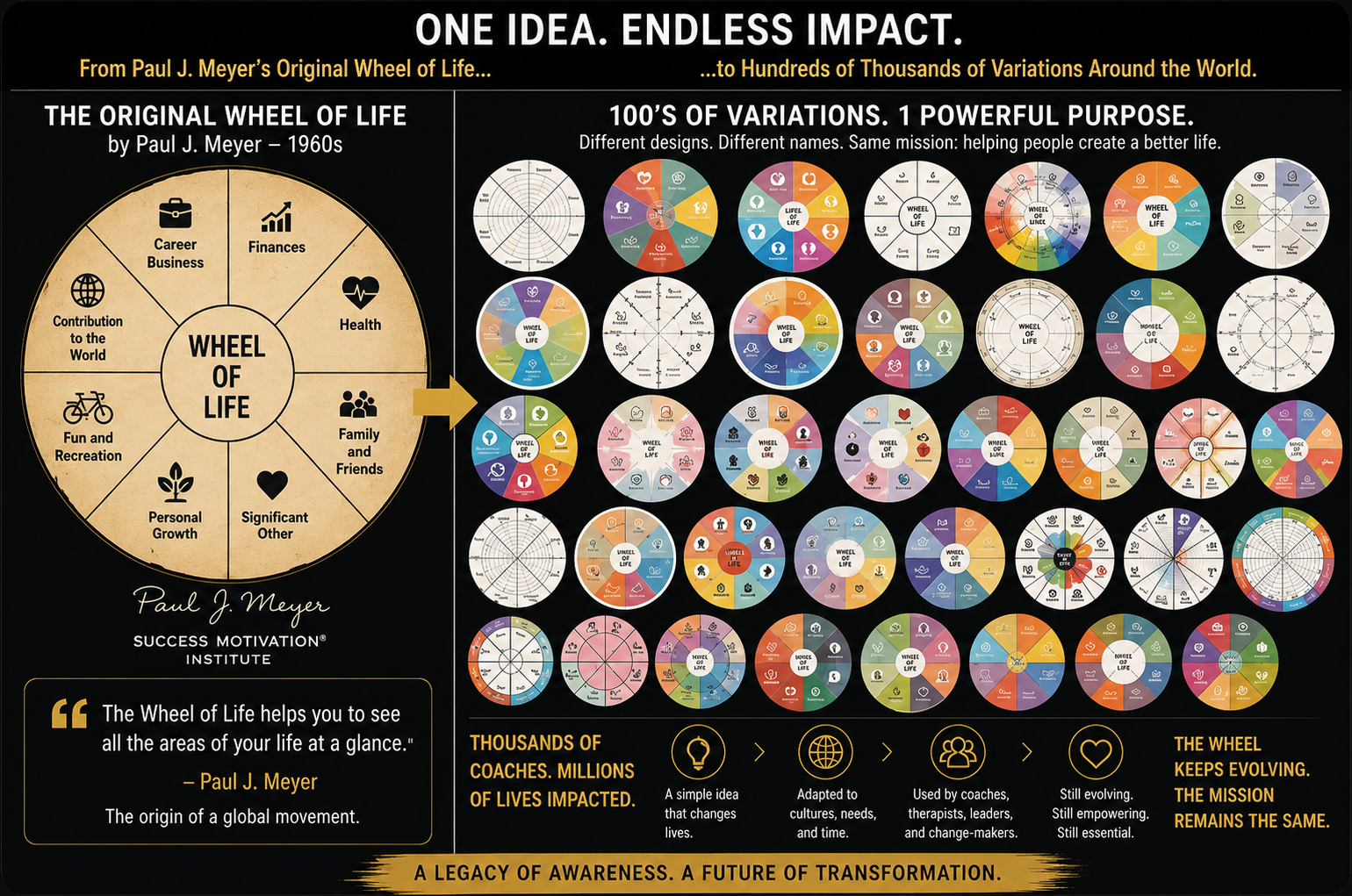
ONELife’s Strategic Framework: 8 Life Domains
Unlike these single-domain methods, ONELife operates across your entire life:
- Work & Career
- Health
- Relationships
- Finances
- Growth & Learning
- Environment
- Giving Back
- Hobbies
ONELife helps you:
- Assess current state across all 8 domains
- Identify which 2-3 domains need focus this quarter
- Make trade-offs when domains compete for your time
- Reassess quarterly as context/goals evolve
- Ensure you’re not optimizing one domain while neglecting others
The Complete System: ONELife + Traditional Methods
Here’s how they work together:
Step 1: Strategic Direction (ONELife)
Weekly: Assess your 8 life domains. Identify top 2-3 priorities for this week. Example: Leadership Development (Career) + Family Connection (Relationships) are your focus areas.
Step 2: Domain Allocation (ONELife)
Determine rough time/energy allocation: 40% to Leadership Development, 30% to Family, 20% to Health (baseline), 10% to other domains.
Step 3: Tactical Execution (Traditional Methods)
Now use the 9 methods WITHIN your strategic priorities:
- Buffett’s 5/25: Identify 5 leadership initiatives, ignore the other 20
- Time Blocking: Protect morning blocks for leadership work, evening blocks for family
- Eisenhower: Within leadership domain, focus on important-not-urgent quadrant
- Eat That Frog: Your morning ‘frog’ is the hard leadership conversation
- Batching: Batch all leadership check-ins on Tuesdays
Step 4: Strategic Reassessment (ONELife)
End of week/month/quarter: Review results. Did leadership initiatives work? Has context shifted? Update priorities for next quarter. Adapt execution methods accordingly.
Why This Matters: The Hidden Cost of Tactical-Only Thinking
Most people use these 9 methods brilliantly. They’re highly efficient. But they’re often efficiently executing the wrong strategy:
Scenario 1: The Productivity Trap
You use all 9 methods perfectly for work tasks. You’re crushing it professionally. But you haven’t seen your family in weeks, your health is declining, and you’re questioning if this career path even matters to you anymore.
What’s missing: Strategic allocation across life domains.
Scenario 2: The Optimization Illusion
You’ve time-blocked, batched, and eaten your frogs consistently for 6 months. You’re executing last quarter’s priorities flawlessly. But your priorities have shifted (you got promoted, your strategic needs are different now) and your execution system hasn’t adapted.
What’s missing: Quarterly strategic reassessment.
Scenario 3: The Trade-off Paralysis
You have A-tasks in work, A-tasks in family, A-tasks in health. All are important. Eisenhower doesn’t help (they’re all in the same quadrant). Buffett’s 5/25 doesn’t help (you can’t compare work goals to family goals). You’re stuck.
What’s missing: Cross-domain prioritization framework.
Conclusion: Strategy Before Tactics
The 9 traditional methods are excellent. Don’t abandon them. But recognize their scope:
➜ They optimize execution. ONELife optimizes direction.
➜ They work within domains. ONELife works across domains.
➜ They assume you know priorities. ONELife helps you determine priorities.
➜ They’re tactical. ONELife is strategic.
The messy middle, between goals and execution, requires both:
- Strategic clarity about which life domains need focus (ONELife)
- Tactical excellence in executing within those domains (These 9 methods)
Use ONELife to navigate the messy middle. Use these 9 methods to execute with precision.