


Tiny habits work brilliantly. You’ve mastered the Fogg Behavior Model. You understand that Behavior = Motivation × Ability × Prompt. You’ve anchored tiny habits to existing routines. After brushing your teeth, you do two push-ups. After pouring coffee, you write one sentence. The habits stick because they’re tiny, specific, and perfectly designed.
BJ Fogg’s research at Stanford has revolutionized how we think about behavior change. His insights work. Millions have proven it.
But here’s the question nobody’s asking:
Are you designing the right tiny habits?
Fogg shows you how to change behavior. He doesn’t tell you which behaviors to change. And that’s where most people get stuck in the messy middle.
The Behavior Design Breakthrough
Fogg’s insight is foundational: forget willpower. Forget motivation. Design for tiny behaviors that naturally stick.
The Fogg Behavior Model reveals that for any behavior to occur, three elements must converge:
- Motivation: You want to do it
- Ability: You can do it
- Prompt: You’re reminded to do it
Most behavior change fails because we rely on motivation (which fluctuates) or make behaviors too hard. Fogg’s solution? Make behaviors tiny (maximizes ability), anchor them to existing routines (provides prompts), and celebrate immediately (boosts motivation naturally).
Tiny habits work because they work with human psychology, not against it. You don’t need discipline. You need design.
It’s brilliant. But behavior design assumes you already know which behaviors to design.
The Behavior Selection Problem
Fogg’s method makes any tiny habit stick. That’s its power. And its challenge.
Because if you can design any behavior, which behaviors should you design?
Common scenarios:
The Everything Approach: You want tiny habits for fitness, learning, networking, creativity, relationships, and productivity. Fogg’s method works for all of them. But you have limited anchor moments in your day. Which habits get the anchors?
The Optimization Trap: You’ve successfully built tiny habits for last year’s goals. They’re automatic now. But your priorities have shifted. You’re efficiently executing behaviors that no longer serve where you’re heading.
The Shallow Impact Problem: You’ve designed 15 tiny habits. All stick. But they’re not moving the needle on what actually matters because they’re not strategically chosen.
The Context Shift: The tiny reading habit was perfect when you needed to learn. Now you need to lead. Is reading still the highest-leverage tiny habit?
The Anchoring Mismatch: You’ve anchored habits to morning routines, but your energy and strategic needs have shifted to evening. The habits work, but the timing doesn’t serve your actual life.
Fogg’s method ensures behaviors stick. It doesn’t ensure you’re sticking with the right behaviors.
From Behavior Design to Strategic Behavior Design
Fogg focuses on the how of behavior change. He’s solved it masterfully.
But there’s a layer above behavior design: strategic behavior design. Choosing which behaviors to design based on where you’re trying to go.
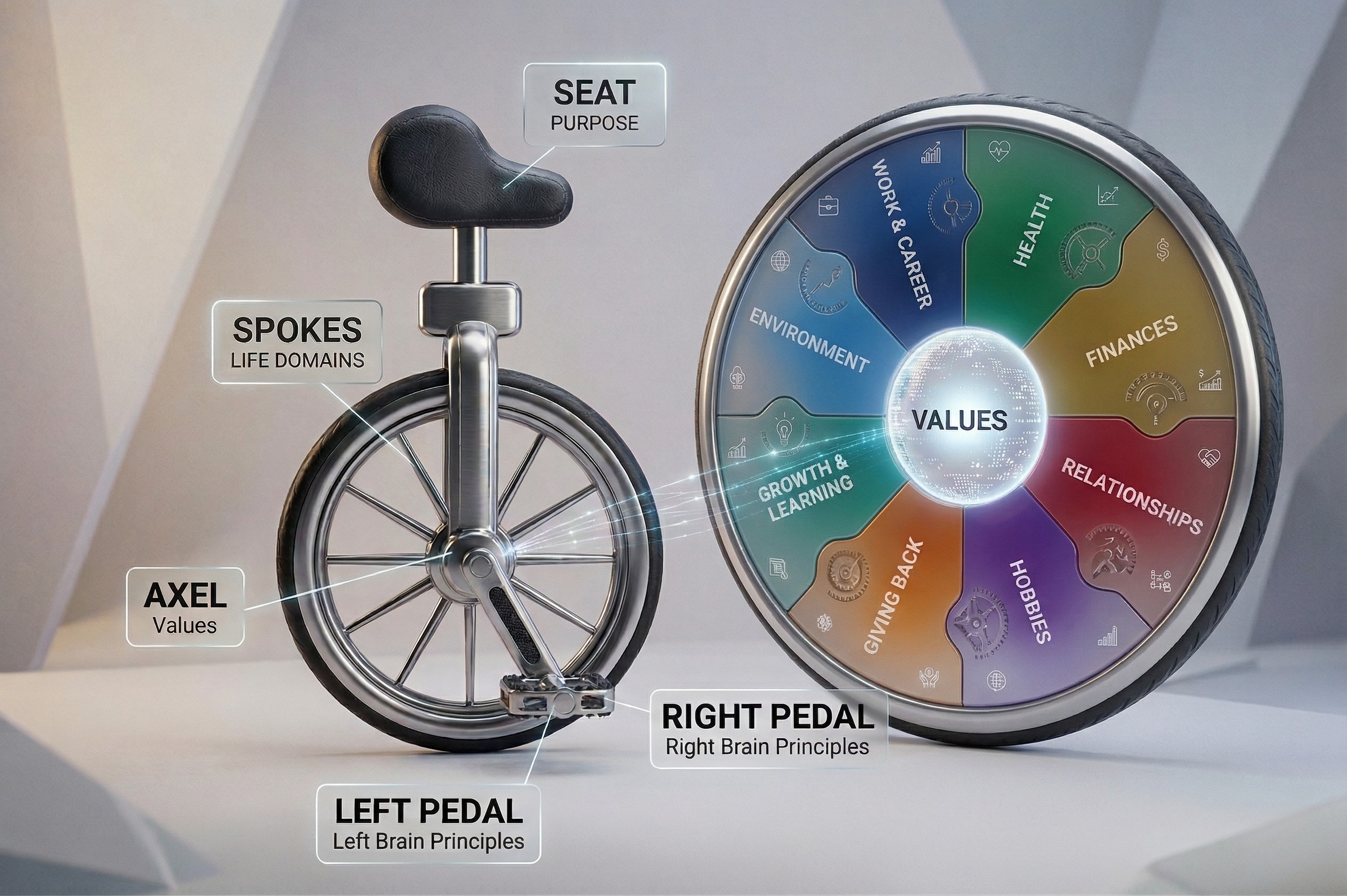
This is OneLife’s focus. Not replacing Fogg’s method, but providing the strategic framework that tells you which tiny habits deserve your limited anchor moments.
💡 The integration looks like this:
➤ OneLife: Identifies your top strategic priorities given your current life stage, goals, and context
➤ OneLife: Determines which behaviors would most advance those priorities
➤ Fogg: Designs those specific behaviors as tiny habits that naturally stick
➤ OneLife: Triggers reassessment when context shifts so your tiny habits evolve with you
Strategy determines what. Fogg’s method determines how. Together, they’re transformative.
The Celebration Test
One of Fogg’s most powerful insights: immediately celebrate after completing a tiny habit. The positive feeling wires the behavior into your brain.
This is brilliant neuroscience. But it reveals something important:
Your brain doesn’t distinguish between strategic and non-strategic behaviors. It wires whatever you celebrate.
You can successfully wire:
- A tiny habit that advances your most important goal
- A tiny habit that feels good but doesn’t actually serve where you’re heading
Both stick equally well. Fogg’s method doesn’t discriminate. That’s why you need strategic clarity before you start designing behaviors.
OneLife provides the filter:
- Here are your top 3 priorities this quarter
- These behaviors would advance them
- These are worth celebrating because they’re strategically aligned
- These other behaviors, while good, don’t serve current priorities
You use Fogg’s method to make strategic behaviors automatic. You don’t use it on behaviors that feel good but lead nowhere important.
The Anchor Point Decision
Fogg teaches that the best prompts are existing routines. After I flush the toilet, I’ll do two squats. After I pour coffee, I’ll text a friend. After I sit at my desk, I’ll write one sentence.
This anchoring makes habits inevitable. But here’s the hidden constraint: you have limited anchor points.
You might brush your teeth twice daily. That’s two potential anchors. You pour coffee once. You sit at your desk once. You have maybe 10-15 strong natural anchors in your daily routine.
But you probably have 30+ behaviors you’d like to change. Which ones get the prime anchor real estate?
Without strategic clarity:
- You might anchor habits randomly (whatever you thought of first)
- Or based on ease (whatever’s simplest to design)
- Or based on guilt (whatever you feel you should do)
OneLife helps you allocate anchor points strategically:
- Your morning anchor? Reserve it for your #1 priority behavior
- Your commute anchor? Second priority
- Your evening anchor? Third priority or recovery/relationships
You’re not just designing habits. You’re architecting a behavior portfolio that compounds toward your actual strategic goals.
Behavior Change That Evolves
One of the beautiful aspects of Fogg’s method: once tiny habits stick, they become automatic. You don’t think about them anymore. They just happen.
This is powerful. And potentially problematic.
Because life changes:
- You get promoted (the behaviors that made you successful as an individual contributor might not serve you as a leader)
- You have a child (your time allocation and energy patterns shift dramatically)
- Your company pivots (the skills you were developing might not matter anymore)
- Your health changes (habits that worked at 30 might need adjustment at 40)
Fogg’s method makes habits stick. It doesn’t tell you when to unstick them.
You can end up with a portfolio of automatic behaviors that no longer serve your current life. They’re working perfectly in the wrong direction.
OneLife provides:
- Quarterly behavior portfolio reviews
- Triggers that suggest when habits need updating
- Framework for phasing out automatic behaviors that no longer serve you
- Permission to redesign your habit architecture as life evolves
You maintain Fogg’s behavior design excellence while ensuring your behaviors adapt as your strategic priorities shift.
The Complete Behavior Change System
Here’s how Fogg + OneLife work together in practice:
1. Quarter Start: Strategic Behavior Design
Open OneLife. Identify your top 3 strategic priorities for this quarter. Ask: what behaviors would most advance these priorities?
Priority #1: Develop leadership skills. Key behavior: Have one meaningful conversation with a team member daily.
Now use Fogg’s method: Make it tiny (“After my morning standup, I’ll ask one person one question about their work”). Make it specific. Anchor it. Celebrate it.
2. During Quarter: Automatic Execution
The tiny habit sticks. It becomes automatic. You’re not using willpower. You’re executing through design. But you’re executing on strategically chosen behaviors.
New behavior idea emerges. Before designing it as a tiny habit, check OneLife: does this serve current priorities? If not, save it for a future quarter. Don’t dilute your limited anchor points.
3. Quarter End: Strategic Reassessment
Review: The tiny habits stuck (thanks to Fogg). Did they move the needle on your priorities (thanks to strategic selection)? Context shifted? Update your behavior portfolio for next quarter.
This is strategic behavior change. Fogg’s reliability. OneLife’s direction.
Motivation Through Meaning
Fogg teaches that motivation is unreliable. Design for ability instead. Brilliant.
But there’s a deeper form of motivation that is reliable: strategic alignment.
When your tiny habits clearly connect to what matters most in your life right now, you’re not relying on motivation to do them (they’re automatic through Fogg’s design). But you’re also not draining your sense of purpose by doing things that feel meaningless.
The difference:
- Random tiny habits that stick: “I do this because I designed it well”
- Strategic tiny habits that stick: “I do this because it’s automated and it advances what actually matters to me”
The second creates a deeper satisfaction. You’re not just executing habits. You’re building a life that aligns with your strategic direction.
Fogg’s method makes change effortless. Strategic selection makes change meaningful.
From Tiny Habits to Strategic Transformation
BJ Fogg has given us the definitive science of behavior change. If you want to build better habits, start with Fogg’s method. It works.
But behavior change without strategic direction is like a powerful engine without a steering wheel. You’ll move efficiently. You just might be moving in the wrong direction.
OneLife provides the strategic layer:
- Fogg shows you how to build tiny habits. OneLife shows you which tiny habits to build.
- Fogg makes behaviors stick through design. OneLife ensures you’re sticking with the right behaviors.
- Fogg creates automatic habits. OneLife ensures those habits serve your evolving goals.
- Fogg solves execution. OneLife solves direction.
Together, they create what every behavior changer needs: tiny habits that stick, strategically aligned, evolving as you grow.
Because tiny habits are powerful. Strategically chosen tiny habits are transformative.