

The 120-Year Evolution from Cage to Unicycle
For 120 years, we’ve been asking the wrong question.
In 1905, German sociologist Max Weber published The Protestant Ethic and the Spirit of Capitalism. In it, he described the “iron cage” of rationalization: how modern work structures trap people in systems that prioritize productivity over humanity. Weber questioned whether we exist to serve our work, or whether work should serve our existence.
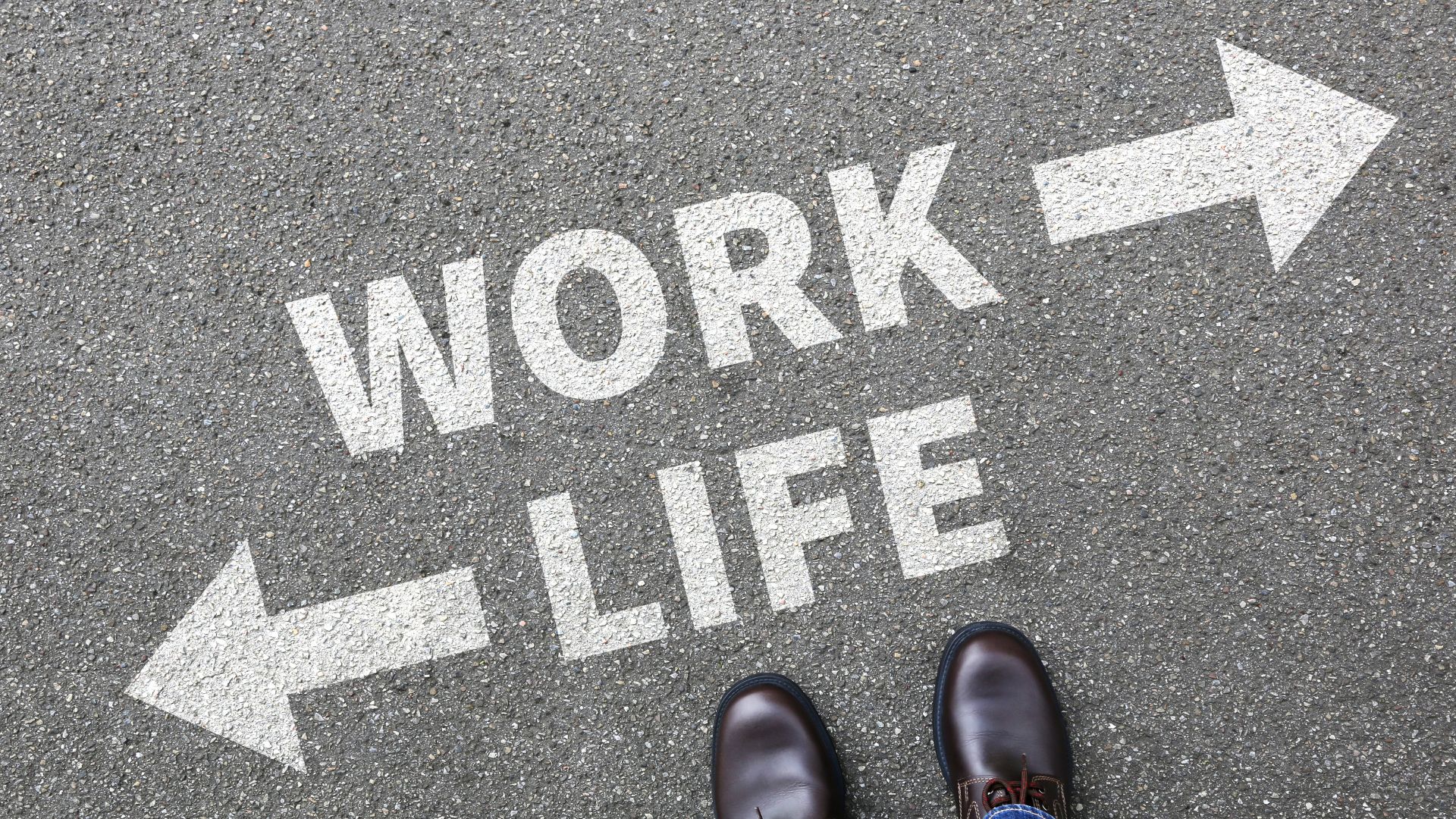
One hundred twenty years later, we’re still asking the same question: do we live to work or work to live? And we still don’t have a good answer.
In 1960, personal development pioneer Paul J. Meyer created the Wheel of Life assessment tool. It helped people see their lives holistically across multiple domains: career, health, relationships, finances, personal growth. For the first time, coaches had a structured way to help clients assess balance across all life areas.
In 1975, the term “work-life balance” was coined in the United Kingdom during the fight for women’s equal pay and workplace equality. The metaphor made sense at the time: work is one side of a scale, life is the other, and your job is to keep them balanced.
For decades, this framework dominated. Then came critiques. The balance metaphor was too rigid, too adversarial. So we evolved to integration and harmony.
In 2000, Stewart Friedman created Total Leadership while serving as senior executive for leadership development at Ford Motor Company. He formally published the approach in Harvard Business Review in 2008. His message: stop trying to balance. Start integrating. Find ways to make your four life domains (work, home, community, self) work together.
Both the Wheel of Life and Total Leadership were progress. Integration beat balance. Holistic assessment beat narrow focus on just career or just health.
But neither solved Weber’s fundamental question. And neither addressed the deeper problem: they still treated life as separate domains that need to be coordinated, integrated, or balanced.
💡 ONELife argues something different: you don’t have multiple domains to integrate. You have one life with multiple areas of focus. Work isn’t separate from life. It’s part of life. Weber’s “iron cage” only exists because we accept the false premise that work and life are separate competing forces.
The bicycle metaphor was always wrong. Life isn’t a two-wheeled system requiring balance. It’s a unicycle requiring unified control.
The Cost of Waiting: Why We Need a Paradigm Shift Now
For 120 years, we’ve been trying to answer Max Weber’s question. For 65 years, we’ve been using the Wheel of Life to assess our domains. For 50 years, we’ve been pursuing work-life balance. For 25 years, we’ve been integrating instead of balancing.
None of it is working.
The Statistics Are Screaming
Despite decades of life coaching, leadership development, and wellness programs, the data reveals a crisis:
- 77% of workers are experiencing burnout
- 91% say unmanageable stress negatively impacts work quality
- 120,000 annual U.S. deaths attributed to workplace stress
- 35% increase in suicide rates since 2000
- Depression tripled since 2019, now affecting 32.8% of adults
- 83% say work stress damages their relationships
- $300 billion in lost productivity annually from stress-related issues
These aren’t the numbers of a system that’s working. These are the numbers of a system in crisis.
The Money We’re Spending
Meanwhile, organizations and individuals are pouring billions into the existing models:
- $2.8 billion: U.S. life coaching industry
- $8 billion: Corporate wellness programs annually
- $366 billion: Global leadership development spending
Where’s the return on investment? Burnout is at 77%. Depression has tripled. Suicide rates are up 35%. The data says we’re not improving. We’re deteriorating.
The Wheel of Life was designed in 1960, before personal computers, the internet, smartphones, or remote work. Work-life balance was coined in 1975 when most households had one breadwinner and you left work behind when you went home. Total Leadership was created in 2000, before the smartphone, before social media, before Zoom meetings, before the pandemic.
And Max Weber’s question has haunted us for 120 years: Do we work to live, or live to work? We’re still stuck in that binary. Still trapped in his iron cage.
Beyond Integration: How ONELife Differs from Total Leadership
Stewart Friedman’s Total Leadership was revolutionary. At a time when work-life balance dominated corporate thinking, Friedman argued that work and life aren’t opposing forces. He introduced a framework built on four domains: work, home, community, and self. His central insight? Stop trying to balance. Start integrating. Find four-way wins where actions in one domain create positive ripple effects in others.
We respect this work deeply. Friedman is a pioneer. But twenty-five years later, we think we can go further.
The Question Friedman Didn’t Fully Answer
Look closely at his structure. Work gets its own domain: a full 25% of your life architecture. Home (relationships, family) gets another 25%. Community (contribution, service) takes a third quarter. And self (personal growth, health, spirituality) gets the remaining slot.
This structure reveals something important: Total Leadership still treats work as a separate entity equal in scope to your entire home life, your entire community involvement, and your entire personal development.
Does your professional life really deserve the same architectural weight as all your relationships, all your personal growth, and all your community contribution? We don’t think so.
From Four Domains to Eight: A More Accurate Map
ONELife uses eight specific life domains:
- Health
- Finances
- Relationships
- Work & Career
- Growth & Learning
- Environment
- Giving Back
- Hobbies & Fun
Work is included, but it’s one domain among eight, not one domain among four. This isn’t semantic wordplay. The structure matters because architecture shapes strategy.
Integration vs. Unification: The Deeper Difference
Friedman’s Total Leadership seeks integration. The goal is to find synergies, create four-way wins, and make your domains work together more effectively. You’re still managing distinct areas, just looking for overlaps and mutual benefits.
ONELife advocates unification. We argue that integration still implies separation. You can’t integrate things that were never divided.
➜ Friedman says: You have four life domains. Stop treating them as competitors. Find ways to make them support each other.
➜ ONELife says: You don’t have four domains to integrate. You have one life with eight areas of focus. Work isn’t separate from life. It’s part of life.
This isn’t a subtle distinction. It changes everything about how you build strategy.
And it finally provides an answer to Max Weber’s 120-year-old question. Neither. You don’t work to live or live to work. You live one integrated life where work is one domain among eight, all serving your unified purpose.
The Bicycle vs. the Unicycle
Friedman improved the bicycle. For decades, we used the bicycle metaphor: work is one wheel, life is the other wheel, and your job is to keep them balanced. Friedman said stop trying to balance two competing wheels. Learn to pedal them together. Make them work in sync. Create integration.
That’s better. Integration beats balance. But here’s what Friedman didn’t say: Life isn’t a bicycle. It never was.
Life is a unicycle. One wheel. One integrated system. One unified structure that doesn’t need integration because it was never separate.
The bicycle metaphor promises easy balance because that’s how bicycles work. Life doesn’t work that way. Life requires the skill of a unicycle rider: constant micro-adjustments, unified control, and the understanding that you’re managing one dynamic system, not two separate wheels trying to stay level.
Beyond Assessment: How ONELife Differs from the Wheel of Life
Paul J. Meyer’s Wheel of Life, created in 1960, has been a coaching staple for 65 years. It’s elegant. Simple. Powerful. You rate yourself in each life area on a scale of 1-10. The visual instantly shows you where you’re thriving and where you’re struggling.
This is valuable work. But here’s the problem: the Wheel of Life stops at diagnosis. It shows you the problem. Then it leaves you stranded.
What Happens After the Assessment?
You complete your Wheel of Life with a coach. You see the lumpy wheel. You identify the low-scoring areas. Your coach asks which area you want to focus on improving.
You pick one. Maybe two. You set some goals. You brainstorm actions. You commit. You leave feeling motivated.
Then what? For most people: nothing changes.
Three months later, you’re back to another Wheel of Life assessment. Health is still a 4. Finances are still a 3. Your wheel looks exactly the same. Why? Because the Wheel of Life is a diagnostic tool, not a system.
The Five Things the Wheel of Life Doesn’t Provide
1. Strategic Foundation
The Wheel of Life has no mechanism for connecting your scores to your deeper purpose, core values, or operating principles. Without this foundation, your goals are disconnected from your why.
2. The Strategy Layer Between Goals and Actions
The Wheel of Life helps you identify goals and brainstorm tactics. But it provides zero strategic architecture between the two. This is why gym memberships fail. Why budgets get abandoned. You have goals. You have tactics. You don’t have strategy.
3. Framework for All Eight Domains
The Wheel of Life identifies weak spots. It doesn’t help you build comprehensive life architecture across all domains.
4. Weekly Maintenance System
The Wheel of Life is typically a one-time snapshot or periodic check-ins every 3-6 months. But life doesn’t work in 3-6 month cycles. Life works in weeks.
5. Ongoing Tools and Technology
After your Wheel of Life assessment, you’re on your own. There’s no app to track alignment. No weekly rhythm tools. No dashboard showing how your strategy is performing over time.
What ONELife Built: The Complete System
ONELife isn’t trying to replace what came before. But we saw critical gaps. So we built a complete system that addresses them.
1. Strategic Foundation: Purpose, Values, Principles
ONELife starts where other approaches should have started: with your purpose. Before you assess your eight life domains, you articulate your Purpose, Core Values, and Operating Principles. This is the foundation that makes your domain scores meaningful.
2. POST Framework: The Missing Strategy Layer
For each of your eight life domains, ONELife provides:
- Profile: Current reality
- Objectives: SMART goals
- Strategy: Your approach
- Tactics: Specific actions with frequency
This structure forces you to move beyond vague goals to complete strategic architecture. And you do this for all eight domains, not just the weak ones.
3. Weekly Rhythm Tools
ONELife’s app turns strategy into rhythm. Every week, you’re checking alignment, adjusting priorities, learning from patterns, and maintaining momentum.
Conclusion: The Evolution Continues
The journey from Weber’s iron cage to unified life strategy has taken 120 years:
- 1905: Max Weber introduces the “iron cage” and asks: Do we work to live, or live to work?
- 1960: Paul J. Meyer creates the Wheel of Life: holistic assessment across life domains
- 1975: Work-life balance term coined in UK during fight for women’s equal pay
- 2000/2008: Stewart Friedman develops Total Leadership: integration over balance
- 2025: ONELife introduces true unification: one life, eight domains, complete strategic architecture
Each step was progress. But each approach still carried the fundamental flaw: treating life as separate pieces that need coordination.
ONELife offers something different: true unification. Not better integration. Not more comprehensive assessment. But recognition that your life was always unified. Weber’s iron cage was an illusion created by false separation. The bicycle metaphor was always wrong.
You’re riding a unicycle. One wheel. One system. One life.
One hundred twenty years after Weber asked the question, ONELife provides the answer: Neither. You don’t work to live or live to work. You live one unified life.