

Communication systems break down into three parts: the Messenger, the Message, and the Audience. When confusion, chaos, or falsehood dominate, it’s never just one of these. It’s the system itself that’s misaligned.
This realization didn’t come to me through politics. It came through business.
For most of my career, I lived inside systems. Sales systems. Life systems. Strategy systems. Tactical systems. Performance systems. Cultures that never called themselves systems but behaved exactly like them.
Over time, I noticed something that changed how I see communication forever:
The message is not the message. It’s the output of a deeper structure.
This article explores how business, political communication, and life design all operate through the same underlying architecture, and how that insight led to the creation of ONELife: a Life Strategy System and app that helps people align fragmented lives into one coherent system.
MESSENGER: The Source of Authority
The messenger isn’t simply the speaker. The messenger represents where authority is perceived to live, whether in an organization, a person, or an institution.
In healthy systems, authority is distributed: facts, values, shared norms, and accountability all participate.
In stressed systems, authority collapses into personalities, brands, or symbols. When trust in institutions erodes, people stop asking “Is this true?” and start asking “Who is saying it?”
Once authority moves from evidence to identity, meaning becomes unstable.
MESSAGE: The Story That Organizes Reality
The message isn’t data. It’s narrative. It tells people who they are, what’s wrong, who’s to blame, and what must be done.
In business, the message is often framed as value, differentiation, or innovation. But under pressure, it becomes emotional architecture: fear, urgency, belonging, and status.
This is when systems drift toward control instead of clarity.
AUDIENCE: The Meaning-Maker
The audience is never passive. They co-create meaning through interpretation, repetition, and defense of the narrative.
When systems fracture, people gravitate toward stories that restore coherence, even if they distort reality.
Belonging replaces verification.
What Business Taught Me About Communication Systems
I watched great products fail while mediocre ones scaled.
I saw fear outperform value.
I saw branding replace truth.
It became clear: most business communication isn’t designed to inform. It’s designed to stabilize power under pressure.
💡 Corporate demagoguery isn’t a moral failure. It’s a systems failure.
Demagoguery is the practice of gaining power or influence by appealing to people’s emotions, fears, and prejudices rather than reason, facts, or constructive solutions.
A Case Study: Political Communication Systems
Political communication is often discussed in moral terms. But viewed through a systems lens, something more structural is happening.
Some leaders don’t persuade by building shared understanding. They replace the conditions that make shared understanding possible.
This isn’t about whether people agree. It’s about how meaning itself is produced when trust in institutions collapses.
In a healthy communication system, truth is supported by:
- Trusted sources
- Shared definitions
- Common reference points
- Stable rules of evidence
When those collapse, people are left without a reliable way to decide what’s real.
That creates epistemic insecurity, the feeling that nothing can be trusted and no authority is legitimate.
Under those conditions, people don’t stop needing meaning. They simply shift how they get it.
They stop asking: “Is this true?”
And start asking: “Who is on my side?”
Certain leaders excel not through deception, but through emotional coherence in a fragmented world. They offer a story that restores identity, belonging, certainty, and direction, even when factual details shift.
Contradictions don’t weaken the system. They strengthen it. Because the loyalty isn’t to the facts, but to the role played in restoring meaning.
This doesn’t make people foolish. It makes them human.
When people feel unheard, displaced, or dismissed by institutions, they’ll gravitate toward any figure who names their pain and offers a narrative that feels stable, even if the facts remain unstable.
From a systems perspective, divisive leaders aren’t the cause of breakdown. They’re a symptom of deeper fragmentation in how meaning is created.
The Real Crisis: Competing Communication Systems
We no longer share a single reality.
We live inside competing meaning systems.
This isn’t sustainable.
ONELife: A Different Architecture
ONELife was born from a realization:
People are trying to live whole lives inside fragmented systems.
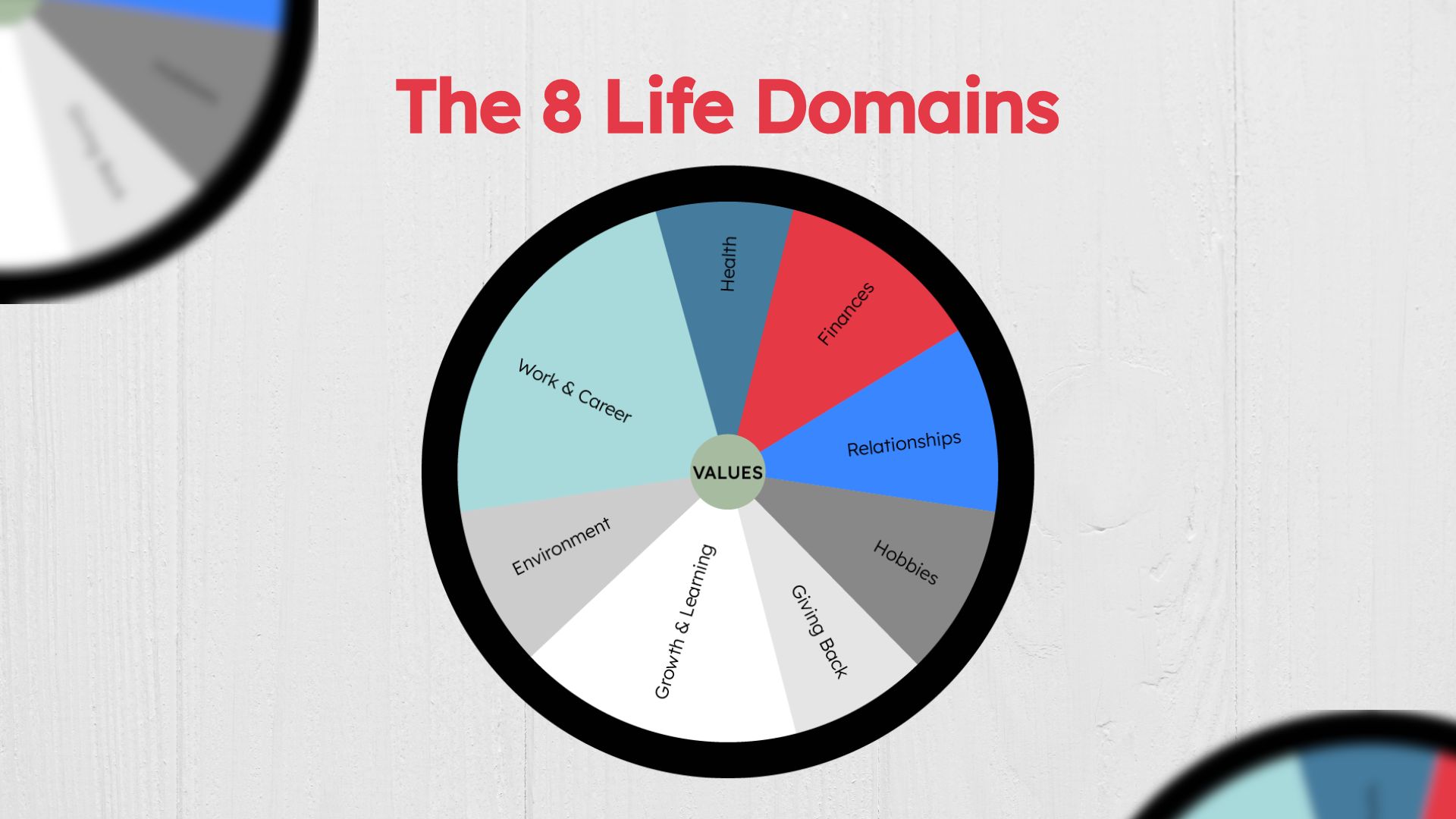
Work. Health. Money. Relationships. Each has separate rules, metrics, and identities.
There aren’t two lives (work and personal). There’s only one.
And it needs a system.
ONELife is a Life Strategy System and mobile app that replaces fragmented productivity tools with one integrated framework for living.
Instead of the Messenger-Message-Audience model that creates division, ONELife operates through:
Architecture → Alignment → Agency
➤ Architecture: The POST framework (Profile, Objectives, Strategy, Tactics) provides structural clarity for decision-making across all 8 life domains.
➤ Alignment: The unicycle model shows how your core values, guiding principles, and purpose must move together, not in isolation, for life to stay in motion with rhythm.
➤ Agency: You decide. ONELife doesn’t tell you what to believe. It gives you a system to think clearly and act with coherence.
The Principles Behind ONELife’s Communication System
Clarity before velocity.
Purpose before process.
Architecture before optimization.
There is one life. It deserves a system designed to hold it.
This article is not a political statement. It’s a systems observation. The purpose isn’t to judge individuals or beliefs, but to understand how meaning is created, destabilized, and restored in modern life, and what we can learn from it to build better systems for living.