
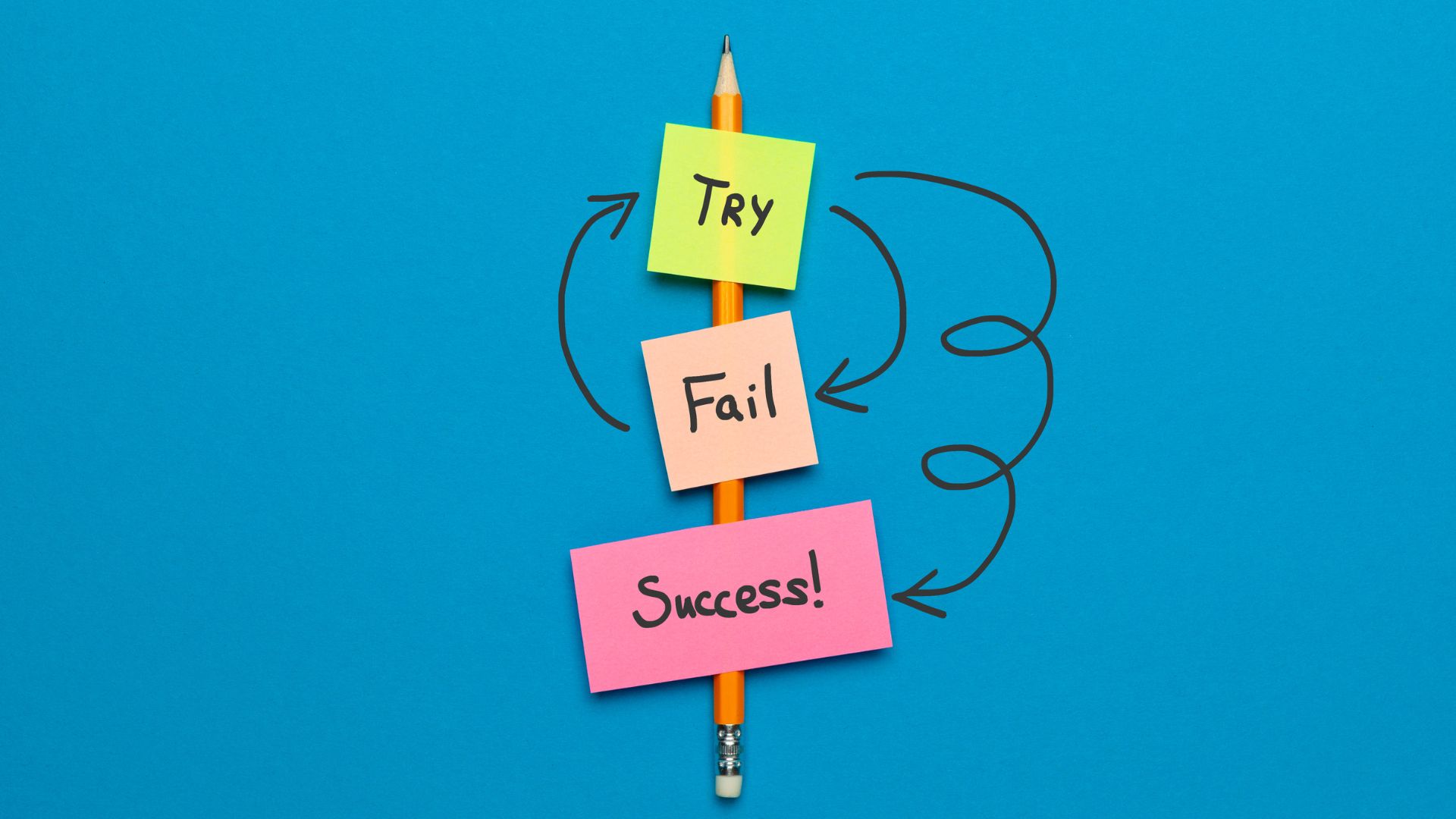

We’ve all seen this cute little flowchart:
If you try, you might fail or succeed. If you don’t try, you fail automatically.
It’s simple. Motivating. Shareable.
But here’s the ONELife perspective: Trying is not the strategy. Trying is Step 3.
The Three Steps Everyone Skips
Step 1 is clarity.
Step 2 is strategy.
Step 3 is aligned action.
Not random attempts. Not winging it. Not chasing everything at once.
Because trying without clarity isn’t courage. It’s noise. Trying without strategy isn’t progress. It’s drift.
The Problem with “Fail Fast”
And that brings me to the other popular mantra we hear in work and entrepreneurship: “Fail fast.”
Great for startups. Terrible for humans.
In business, fail fast means: Experiment quickly, learn quickly, and don’t overinvest in the wrong path.
But in life? People aren’t prototypes. Relationships aren’t A/B tests. Your identity isn’t a sprint cycle.
💡 Life doesn’t move through rapid failure. It moves through rhythm.
The ONELife Reframe
Don’t fail fast. Learn fast. Adjust wisely. Stay aligned.
➜ Trying is valuable when it’s aligned
➜ Failure is valuable when it’s intentional
➜ Momentum is sustainable when it’s rhythmic
You don’t need to try more. You don’t need to fail faster. You need clarity, strategy, and alignment, so the things you do try actually move you toward the life you want.
Why This Matters
The hustle culture loves “just try” and “fail fast” because they sound like action. But action without direction is just motion. And motion without alignment is just exhaustion.
ONELife asks different questions:
- What are you trying to accomplish, and why?
- How does this attempt align with your purpose and values?
- Which of your eight life domains does this serve?
- What’s your strategy for learning from this, regardless of outcome?
- How does this fit into your sustainable rhythm?
When you have clarity and strategy first, trying becomes powerful. Failure becomes feedback. Progress becomes sustainable.
Without clarity and strategy, trying is just throwing things at the wall. And fail fast becomes fail often, fail randomly, fail exhaustingly.
One Life, One Strategy, One Rhythm
The flowchart isn’t wrong. Trying does give you a chance at success. But it leaves out the most important part: what you try matters as much as whether you try.
Strategic trying beats random trying. Aligned action beats scattered motion. Rhythmic progress beats sprint-and-crash cycles.
Ready to move from random trying to strategic action? Take the ONELife Assessment to gain the clarity and strategic framework that makes every attempt count. Because trying without strategy is just noise. And failing fast without learning is just chaos.
One life. One strategy. One rhythm.