


A hypothesis, and an invitation to push back.
If you’ve done the Odyssey Planning exercise from Designing Your Life by Bill Burnett and Dave Evans, you’ll know the feeling. You map out three wildly different five-year futures, rate them on confidence, coherence, and how much you like them, and something loosens. Possibilities you’d buried start surfacing.
It’s a genuinely good exercise. We recommend it.
But we’ve noticed something. A pattern that comes up again and again when people attempt it. And we want to share the observation, not as a critique of the framework, but as a hypothesis worth testing. We’d genuinely love to know if you recognize it too.
A Quick Note on What the Framework Actually Says
First, a clarification worth making. The Odyssey prompts are deliberately life-wide, not career-specific:
Life #1: The trajectory you’re on now. What will happen if you continue down this path?
Life #2: What if what you do in life #1 is no longer an option? What will you do if you can no longer live the life you are living today?
Life #3: You have all the money you need, so what kind of life would you like to have?
Notice: Life #2 doesn’t say “what if your job disappears.” It says “what if the life you’re living today is no longer an option.” That’s a broader, more interesting question.
Burnett and Evans aren’t asking you to plan three careers. They’re asking you to imagine three lives.
So Here’s What We’ve Noticed
Despite the framework’s intention, most people, in our observation, end up filling the worksheet through a work-and-career lens anyway.
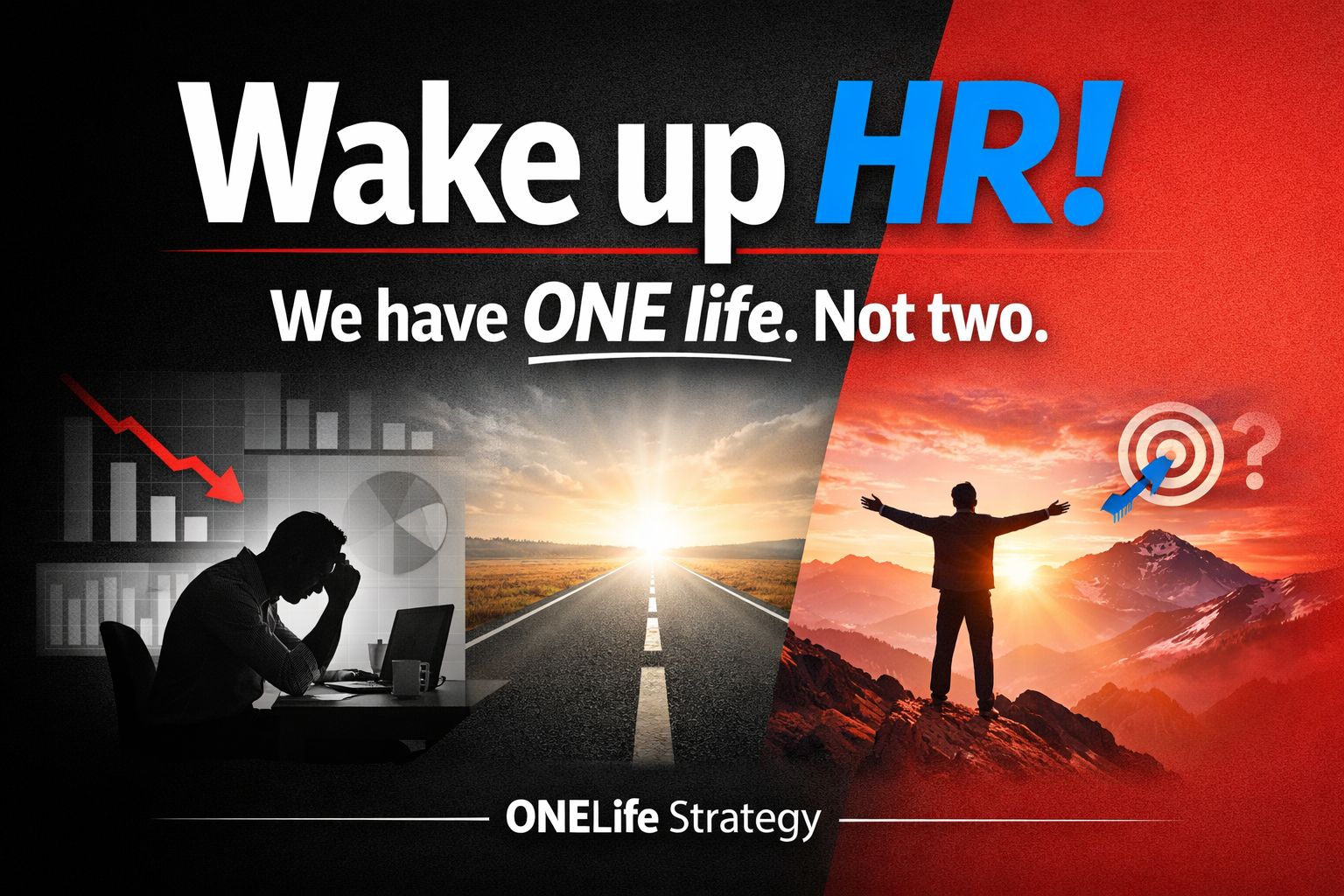
Not because the framework tells them to. But because that’s the lens most of us bring. We’ve been conditioned, deeply, culturally, to define ourselves through what we do for work. The first question at every dinner party isn’t “what do you value?” It’s “what do you do?” Work has colonized identity. And when we sit down to imagine three alternative lives, we tend to reach, almost automatically, for career scaffolding: different job, different industry, different business.
💡 The result is that the three lives on the page often feel like three different versions of a professional self, rather than three expressions of the same whole person.
And that, we think, is where some of the fragmentation comes from. You started the exercise hoping to feel more clarity. You end it holding three different identities, unsure which one is actually you.
(Does this ring true for you? We genuinely want to know.)
The Hypothesis: Identity Work First, Odysseys Second
Here’s our working hypothesis. The Odyssey exercise works best when it’s built on a foundation that most people haven’t laid yet: a clear, articulated sense of who you are independent of what you do.
Before you open the worksheet, we’d suggest spending time with three questions:
➜ What do I value most, not in theory, but in how I actually want to live?
➜ What is the through-line of my life, the thing that’s been true across every life role I’ve ever played?
➜ If I stripped away every external expectation, what kind of person am I trying to become?
Then open the Odyssey worksheet.
Our hypothesis is that something shifts when you do this. The three lives you map stop being three different professional identities and become three different expressions of the same identity. Different stages. Different contexts. Same person.
Life #1: this identity, expressed through building a company.
Life #2: this identity, expressed through writing and teaching.
Life #3: this identity, with complete freedom of form. What does it look like?
You’re no longer choosing between three different selves. You’re choosing between three different stages for the same self.
The Coherence Gauge: The Most Underused Part of the Worksheet
Burnett and Evans include a “Coherence” dial rated Empty to Full. Most people rate it quickly and move on. But we think it’s the most important gauge on the page.
Coherence is asking: does this life hang together?
Not: is it exciting? Not: is it realistic? But: does the way I’d spend my days in this life actually reflect who I am and what I’m for?
That’s the question. And it’s very hard to answer honestly if you haven’t done the identity work first. Without it, you might score a life highly on confidence (“I know how to do this”) and on “I like it” (“it sounds appealing”) but still feel something is off, and not be able to name why.
That unnamed feeling? We think it’s your values trying to get a word in.
What We’re Building, and What We Want to Know
This is the problem ONELife is built around. Not work-life balance. Not integration or harmony, which still assume two separate things that need managing. But one coherent, purposeful life: identity first, everything else flows from that.
The Odyssey exercise is a great prototyping tool. We’re not trying to replace it. We’re suggesting it works better with a foundation underneath it.
But this is a hypothesis, not a verdict. And we’d rather test it than assert it.
So: have you done Odyssey Planning? Did your three lives end up career-shaped even though you didn’t intend them to? Or did you manage to keep them genuinely life-wide?
Tell us what happened. That’s the conversation we want to have.
Ready to do the identity work before your next Odyssey session? Take the ONELife Assessment to clarify your purpose, values, and principles, then map your three lives from that foundation. Because identity first, everything else flows from that.