
The Octopus Organization x ONELife: What Companies Just Figured Out, Individuals Need Too
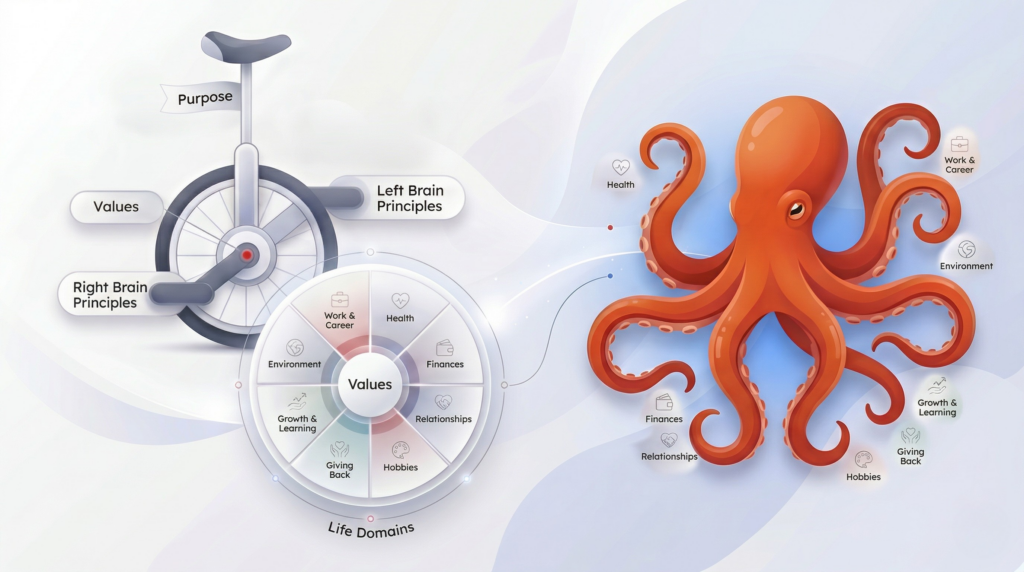
Two AWS executives wrote The Octopus Organization: stop treating companies like machines. Distributed intelligence, not rigid hierarchy. Each arm senses and acts independently while remaining coherent. The moment I read it, I thought: this is exactly what individuals need too. Most people are Tin Man Individuals: domains optimized in isolation, no coherent whole. ONELife is the Octopus model for people.
ONELife Unicycle Reading List: 3 Books for the Unicycle Foundation + Every Domain of Your Life
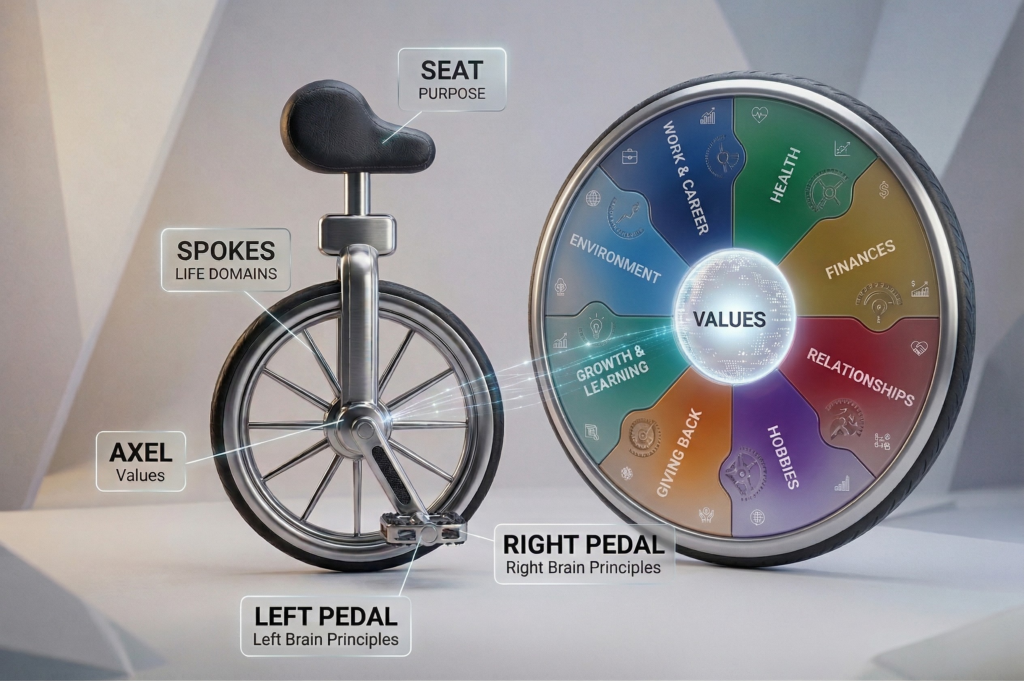
The ONELife Unicycle has two levels: foundation (Seat: Purpose, Axle: Values, Pedals: Principles) and eight domains where that foundation becomes reality. Most reading lists address domains. This one starts at the foundation. 33 books across 11 sections. Three per domain. Curated for insight, not popularity. Every entry connects to how you use ONELife.
Why the ‘Buy Back Your Life’ Model Fails and How ONELife Fixes It

Buy Back Your Time teaches outsourcing below your hourly rate. But delegation without design is efficiency without effectiveness. ONELife adds the missing lens: alignment. Not all hours are equal. Some compound meaning. The real question isn’t what to outsource, it’s what deserves your time in the first place.
Atomic Habits Need Direction: Why James Clear’s System Reveals the Strategy Gap

James Clear’s Atomic Habits teaches how to build habits brilliantly. But it assumes you know which habits to build. That’s the gap. Perfect systems executing wrong strategy is efficient failure. ONELife provides the strategic layer: priority frameworks, trade-off navigation, identity architecture. Clear builds habits. ONELife ensures you build the right ones.
The Hard Truth About “Try” and “Fail Fast”: An ONELife Perspective
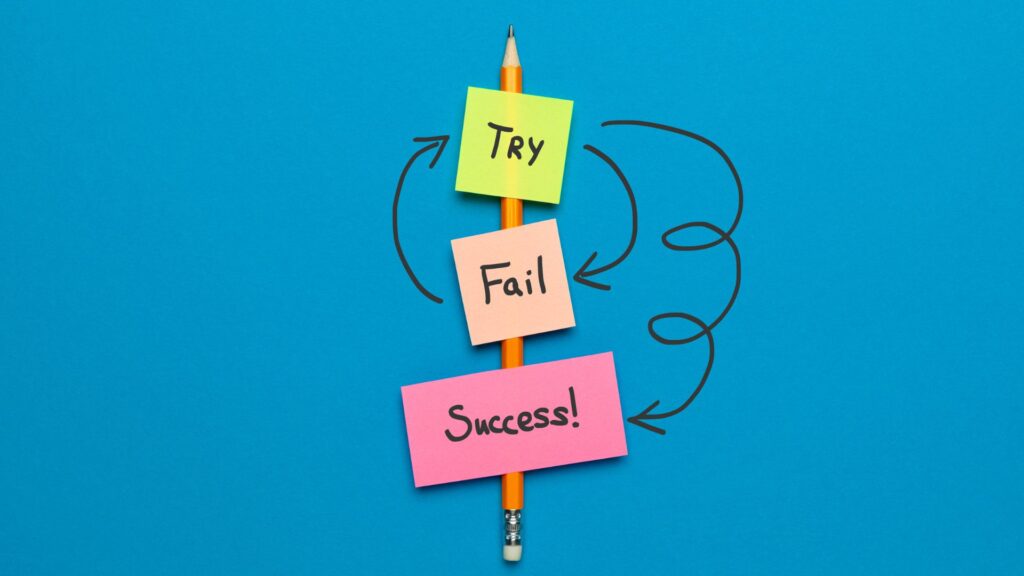
“Just try” sounds motivating. “Fail fast” sounds productive. But trying without clarity is noise. Failing without strategy is drift. ONELife reframes it: Clarity first, strategy second, aligned action third. Don’t fail fast. Learn fast. Adjust wisely. Stay aligned. Life moves through rhythm, not rapid failure.
Why “Life Hacks” Aren’t Enough: Reviewing Sahil Bloom’s 50 Tips Through the ONELife Lens
Sahil Bloom’s 50 life hacks are valuable tactics. But tactics without strategy create sophisticated chaos. ONELife provides what life hacks miss: the strategic framework that turns scattered advice into an aligned system. Strategy first, tactics second.
Less But Better: Why Greg McKeown’s Essentialism Needs an Operating System

Essentialism teaches you to focus on less but better. Greg McKeown’s framework is transformative, but it assumes you can identify what’s essential. For most people, that’s the hard part. McKeown gives you the filter (“Is this essential?”), but OneLife provides the framework: how to determine what’s essential when everything seems important. Strategy determines what. Essentialism determines how.
Tiny Habits, Strategic Direction: Why BJ Fogg’s Behavior Design Needs a Life Strategy Layer

BJ Fogg’s Tiny Habits revolutionized behavior change, but there’s a question nobody asks: are you designing the right tiny habits? Fogg shows you how to change behavior, not which behaviors to change. OneLife provides the strategic layer above behavior design, ensuring your tiny habits compound toward what actually matters. Strategy determines what. Fogg determines how.
The Science of the Messy Middle: How Dan Ariely’s Research Reveals Why We Need OneLife

The messy middle is where you get stuck between knowing what you want and actually achieving it. Traditional goal-setting apps and coaching programs miss this crucial layer. Behavioral economist Dan Ariely’s research shows we’re predictably irrational, struggling with hundreds of micro-decisions. OneLife is building a strategic operating system that works with human nature, not against it.
Deep Strategy: Why Cal Newport’s Research Shows We Need More Than Deep Work

You’ve mastered deep work. Calendar blocked, phone silenced, focus protected. But you stare at your screen, paralyzed by choice. Which deep work matters most? Cal Newport teaches HOW to focus. He doesn’t teach WHAT to focus on. That gap between attention and direction is costing you real progress.