


This is not just the story of a product. It is the story of how a question I could not answer in 2009 eventually became a Life Strategy System for the whole of life.
One Year in Thailand, 30 Days with Monks
Thailand, 2009. My residence was near Naiharn Beach in Rawai, Phuket.
I am sitting cross-legged on a wooden platform in the mountains of Northern Thailand, surrounded by forest monks who have devoted their lives to a question most of us are too busy to ask: What does it mean to live well?
I am on disability leave from my employer. My marriage is failing. I have relocated seventeen times in my career. I have more achievements than I can count and more emptiness than I care to admit.
But I am not in Thailand for thirty days. I am there for a year.
Thirty days with forest monks. Thirty days in a mind, body, and spirit detox center. Ninety days working through NLP and EFT during what I now recognize as a potentially dangerous mid-life crisis. The rest of the year was spent traveling, reflecting, and slowly rebuilding.
The monks kept asking me one question:
What are you moving toward?
For the first time in my life, I did not have an answer.
That question stayed with me long after I left Thailand.
The Path That Got Me There
Let me back up.
I’m MJ. And my life has been anything but linear.
By 2009, I’d lived through:
- Two divorces that brought me to my knees
- Bankruptcy at 31 and rebuilding from nothing
- Losing my mother at 23, when I needed direction most
- Raising four children across three generations
- Family alcoholism that taught me hard lessons about care versus control
- Seventeen geographic relocations across three continents
- Nine U.S. states, eight international cities, and seven countries lived in
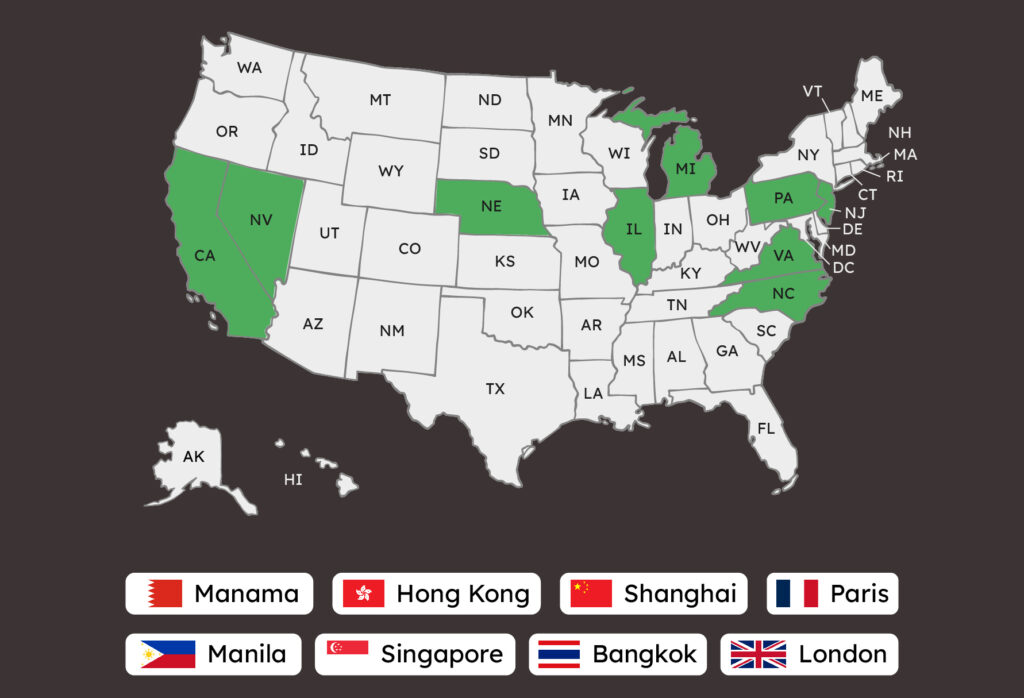
- Forty countries visited for work and pleasure
- Twenty startups launched
- Thirty employers, countless roles, and more wobbles than wins
From the outside, the career looked impressive. IBM executive. Global roles. C-suite positions. Co-founder of my first startup with a successful exit.
Inside, I was coming apart. Exhausted. Overloaded. Disconnected from what mattered most.
The mid-life crisis hit like a freight train. Not the buy-a-sports-car version. The dangerous kind. The kind where you are not sure you are going to make it out.
I knew I needed more than a vacation. I needed a reset.
So I took a year. Thailand. 2009.
My life has been more like riding a unicycle than a steady bike: wobbly, unpredictable, always requiring adjustment. That is also where much of the wisdom came from.
What I Found in Thailand: A Year of Rebuilding
Phase 1: 30 Days with Forest Monks

The monks did not give me answers. They gave me space.
Thirty days of silence changes the volume of everything. The roles begin to fall away: executive, father, husband, achiever. What remains is you, and the question of what actually matters.
No phone. No email. No goals. No meetings. Sitting. Walking. Meditating. Being.
The lesson was not to add another practice or another goal. It was almost the opposite.
Clarity does not always come from adding more. Sometimes it comes from removing what is no longer serving you.
Phase 2: 30 Days of Mind/Body/Spirit Detox
After the monks, I moved to a mind, body, and spirit detox center.
This was not about substances. It was about detoxing from decades of accumulation: too many goals, too many screens, too many versions of myself, too many unprocessed emotions, too many unfinished chapters.
The process was physical, emotional, and reflective. Fasting. Movement. Stillness. Processing.
By the end, I could see more clearly what I wanted to carry forward and what I needed to leave behind.
Phase 3: 90 Days of NLP and EFT
Seeing clearly and rebuilding are two different things.
I spent ninety days working with Neuro-Linguistic Programming and Emotional Freedom Techniques to address the mid-life crisis that had brought me to Thailand.
The work helped me examine thought patterns, grief, shame, fear, failed relationships, and the question of how to become a better father and a more grounded human being.
Layer by layer, the noise started to settle.That year in Thailand did not hand me ONELife. It gave me the questions that eventually led to it.
Five Insights That Changed Everything
1. One Phone, One Life
This was 2009. The iPhone had arrived only two years earlier, and suddenly work and personal life were living on the same device.
At first, that looked like a boundary problem. Over time, I saw something deeper.
Work and life were not two lives that technology had suddenly mixed together. They had always been parts of the same life. Technology simply made the separation harder to pretend.
You do not have a work life and a personal life. You have one life, and work is part of it.
2. Strategy Isn’t Just for Business
I had spent decades applying strategic thinking to companies, products, markets, and revenue. Yet my own life was often reactive, fragmented, and driven by whatever was most urgent.
The obvious question became impossible to ignore:
Businesses run on strategy. Why not our lives?
Objectives, choices, priorities, trade-offs, resources, constraints, and tactics are not uniquely business concepts. They are part of making intentional decisions about anything that matters.
I had simply never applied that discipline to the most important thing I would ever lead: my own life.
3. Work-Life Balance Was the Wrong Architecture
We have been taught to think about work and life as two sides of a scale. One goes up, the other comes down, and somehow we are supposed to keep them in equilibrium.
But life does not behave that way. It moves. It changes. One decision can ripple through health, finances, relationships, work, environment, and everything else.
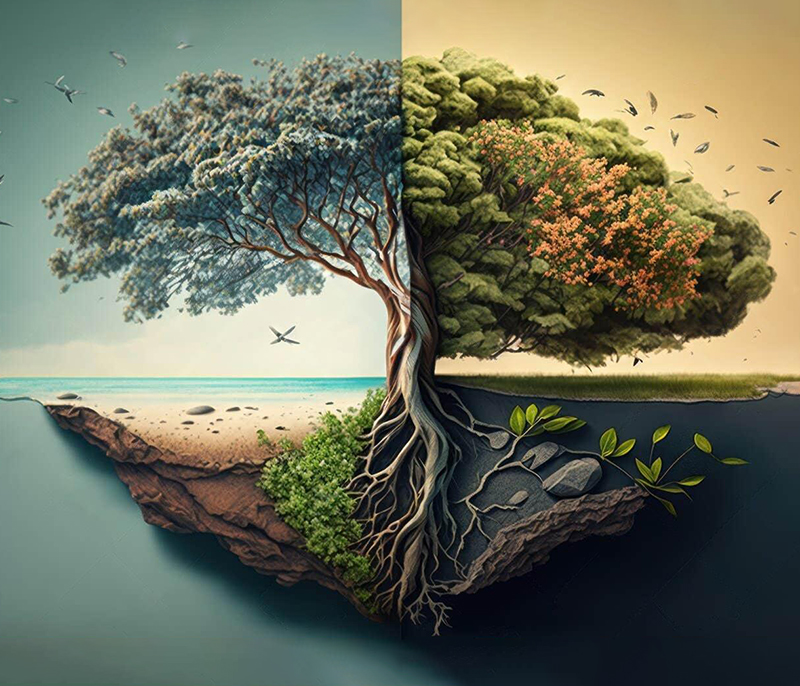
The unicycle eventually became the simplest visual expression of what I had come to believe: one wheel, one life, many interconnected parts.
Life is not about balancing two lives. It is about creating coherence across the one life you actually have.
4. Life Needs Both Direction and Feedback
The monks lived with rhythm and reflection, but what stayed with me was not the idea of a rigid routine. It was the importance of direction and adjustment.
Life strategy cannot be static because life is not static.
Direction starts from the top: who you are, what matters, what you are trying to accomplish, and how you intend to get there.
Experience then flows back upward. You learn. Circumstances change. Priorities shift. A strategy that made sense a year ago may need to evolve.Top-down gives direction. Bottom-up gives feedback. You need both.
5. Design the Whole. Then Keep Improving It
Thailand gave me the question. Looking back, my career also gave me part of the answer.
For years, I walked factory floors selling enterprise software to manufacturers using Design Thinking, Systems Thinking, Total Quality Management, Lean, and continuous improvement. They did not wait until the end to inspect quality into a product. They designed for it across the whole system, stayed anchored to a long-term purpose, and learned from what was happening on the floor.
I had used strategic thinking in my own life, but I had not brought those lessons together across the whole of it. That became the missing connection: a life strategy needs both intentional design and a way to keep learning as life changes.
ONELife grew where those two journeys met: the clarity I found in Thailand and the systems thinking I learned in manufacturing, applied to one connected life.
Why I Built ONELife
I left Thailand in 2010 with clarity I had not felt in years.
Then life happened.
Work returned. Responsibilities returned. The noise returned.
I journaled. Meditated. Set intentions. Tried to hold onto what I had learned.
But insight without strategy was not enough.
Over the next fifteen years, I kept returning to the same problem. We have no shortage of tools for improving parts of life.
Productivity apps organize tasks. Fitness apps track workouts. Finance apps monitor spending. Meditation apps support reflection. Coaches and frameworks can create real change in specific areas.
The problem is not that these things do not work.
The problem is that life does not happen one part at a time.
A career decision affects finances. Finances affect options. Health affects energy. Energy affects relationships. Relationships affect almost everything.
What was often missing was not another tool. It was a strategy connecting the whole.
Businesses use strategy to decide where they are going, what matters, what they will prioritize, what they will not do, and how they will use limited resources.
Why would we not apply that same discipline to the most important thing we will ever lead?
Our life. That question eventually became ONELife.
What ONELife Became
ONELife is a whole-person Life Strategy System.
It starts with identity:
- Purpose
- Values
- Principles
- Beliefs
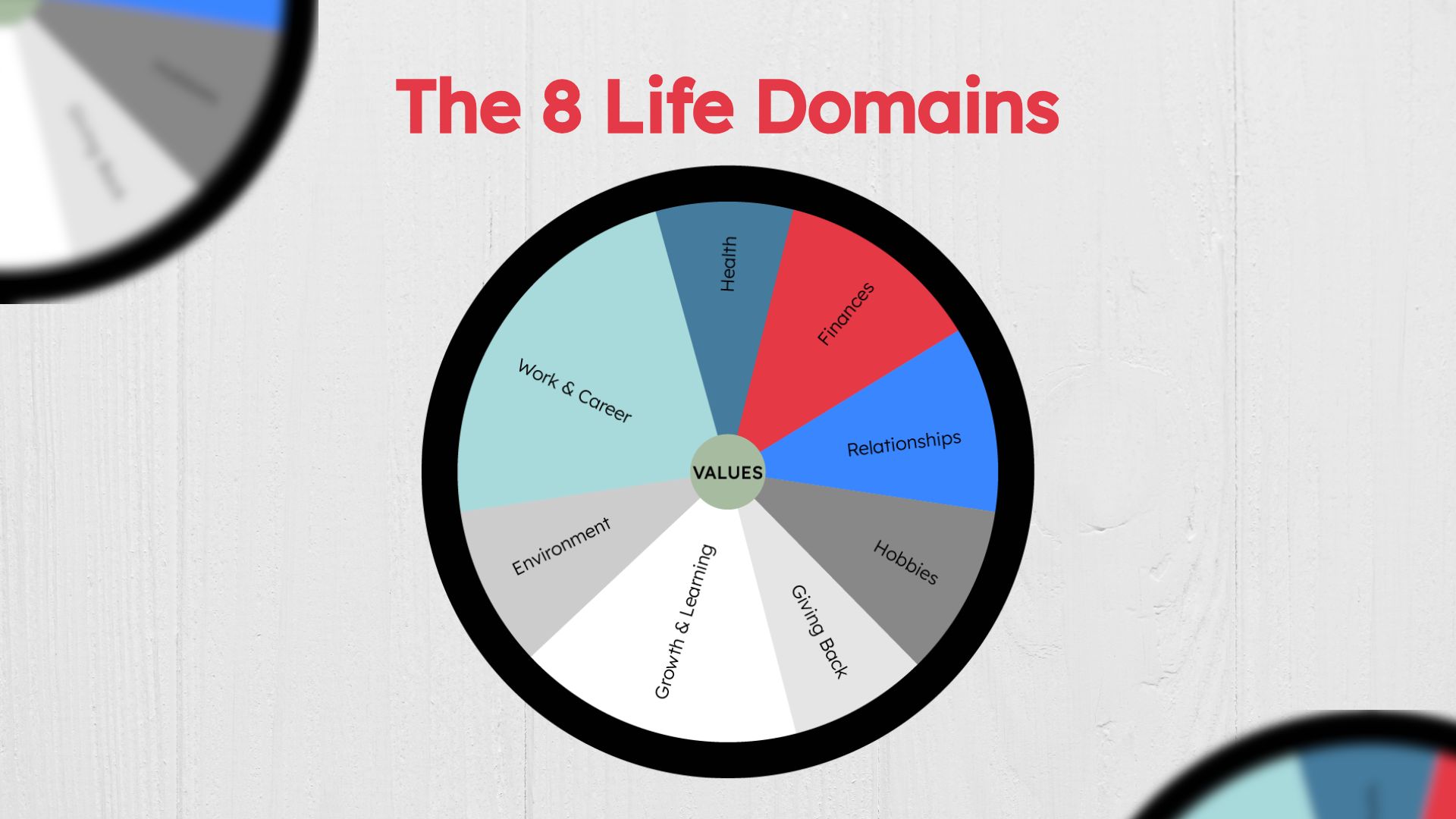
Then it brings all 8 domains of life into view: work and career, health, finances, relationships, growth and learning, environment, giving back, and hobbies and recreation.
Within each domain, ONELife applies a simple strategic sequence:
Profile → Objectives → Strategy → Tactics
Not to optimize every part of life at once.
Not to keep everything perfectly balanced.
And not to tell you what your life should look like.
The purpose is to help you make more intentional choices across one connected life, in coherence with who you are and what matters most.
Some seasons will demand more from work. Others from health, family, finances, growth, or something else. The point is not equal attention. The point is conscious strategy across the whole.
Fifteen Years of Evidence
Thailand gave me the question, but ONELife was not born fully formed in a monastery.
The next fifteen years mattered just as much.
More work. More startups. More family transitions. More technology. More generations entering the workforce. More proof that the lines between work and the rest of life were disappearing.
I watched the language change from work-life balance to integration, blending, harmony, flexibility, and alignment.
The verbs changed. The underlying architecture usually did not.
We were still trying to manage pieces of life rather than build strategy around the whole.
That is the shift ONELife is built around.
What I Know Now

After 45 years of boardrooms and breakrooms, startups and setbacks, global moves and personal reinvention, I have come back to one simple truth.
The question was never:
Do you live to work or work to live?
That question assumes there are two lives.
There are not.
You have one life.
Work is part of it. So are your health, finances, relationships, growth, environment, giving back, and the things you simply love doing.
The question I would ask today is different:
What is the strategy for the life all of those things are meant to serve?
Because movement without direction is just movement.
Goals without strategy are intentions.
Tactics without coherence can make one part of life better while another quietly gets worse.
You do not need to perfectly balance your life.
You need to lead it.
One life. One strategy.